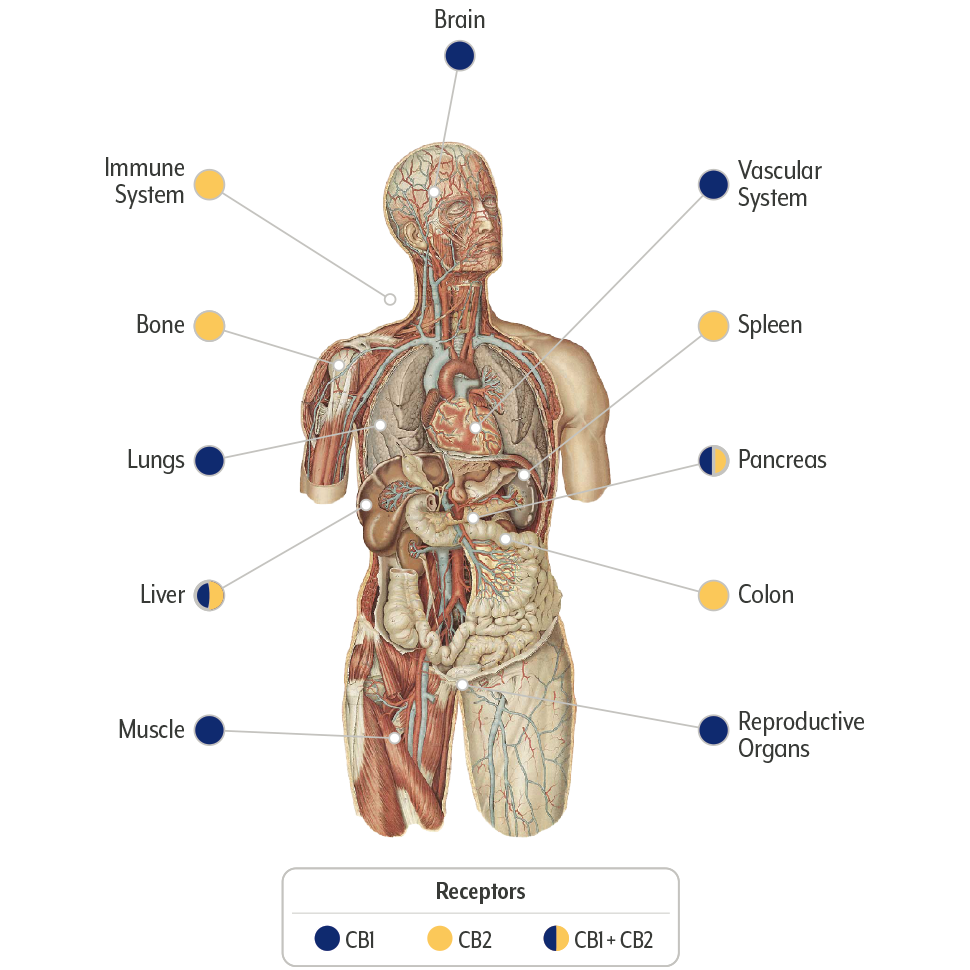

The Endocannabinoid System (ECS)
The endocannabinoid system (ECS) is a complex intracellular communication system. The ECS communicates with the brain, organs, and tissues. It balances and stabilizes activities within the human body. It is vital to overall health, as it maintains internal homeostasis, our state of balance.
Cannabinoids May Have a Role in Regulating:
- Appetite
- Cognition
- Immunity
- Memory
- Mood
- Movement
- Pain
- Reproduction & Fertility
- Sleep
- and more!
ECS Receptors
Three Sources of Cannabinoids

Endocannabinoids
Naturally synthesized within the body. Examples of Endocannabinoids include: ANA (AEA) • 2-AG

Phytocannabinoids
Naturally synthesized by plants. Examples of Phytocannabinoids include:
CBD • CBG • CBN
Δ8-THC • Δ9-THC

Synthetic Cannabinoids
Artificially synthesized in a laboratory. Examples of Synthetic Cannabinoids include: Marinol • Sativex • Epidiolex
Lock & Key Mechanism
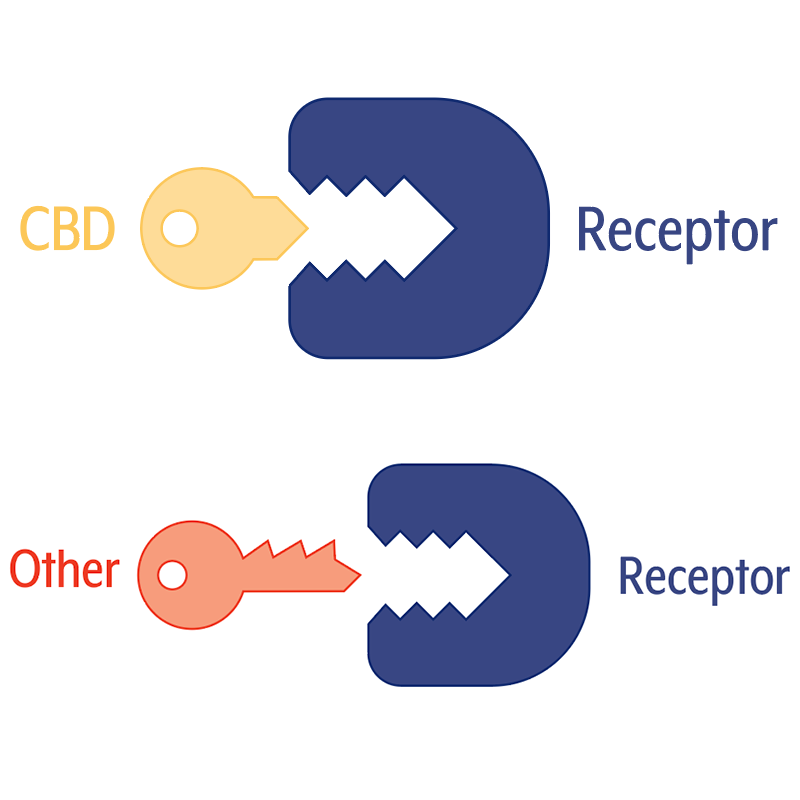
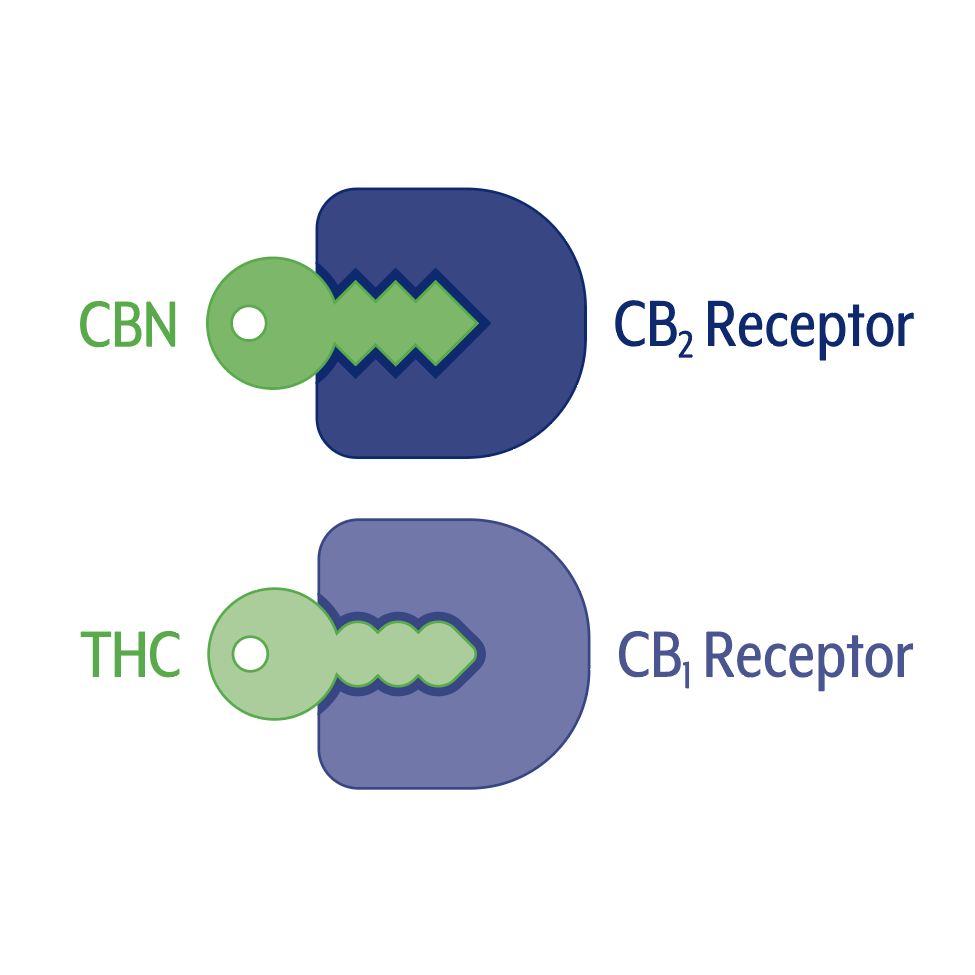
Like a lock and key, receptors in the ECS are primarily made to connect with one endocannabinoid. Phytocannabinoids are structured similarly to our endocannabinoids; they are able to unlock these receptors. When they connect, they can cause changes within in the body.
Anandamide (ANA) and 2-Arachidonoylglycerol (2-AG) are endocannabinoids and neurotransmitters. THC is similar to ANA, also known as AEA. CBD is similar to 2-AG. For example:
Phytocannabindoids
CBD
CBD does not bind to the CB1 & CB2 receptors. Rather, it modifies the ability to bind to cannabinoids and enhances natural levels of endocannabinoids.
Other Compounds
Very few compounds can interact with ECS receptors.