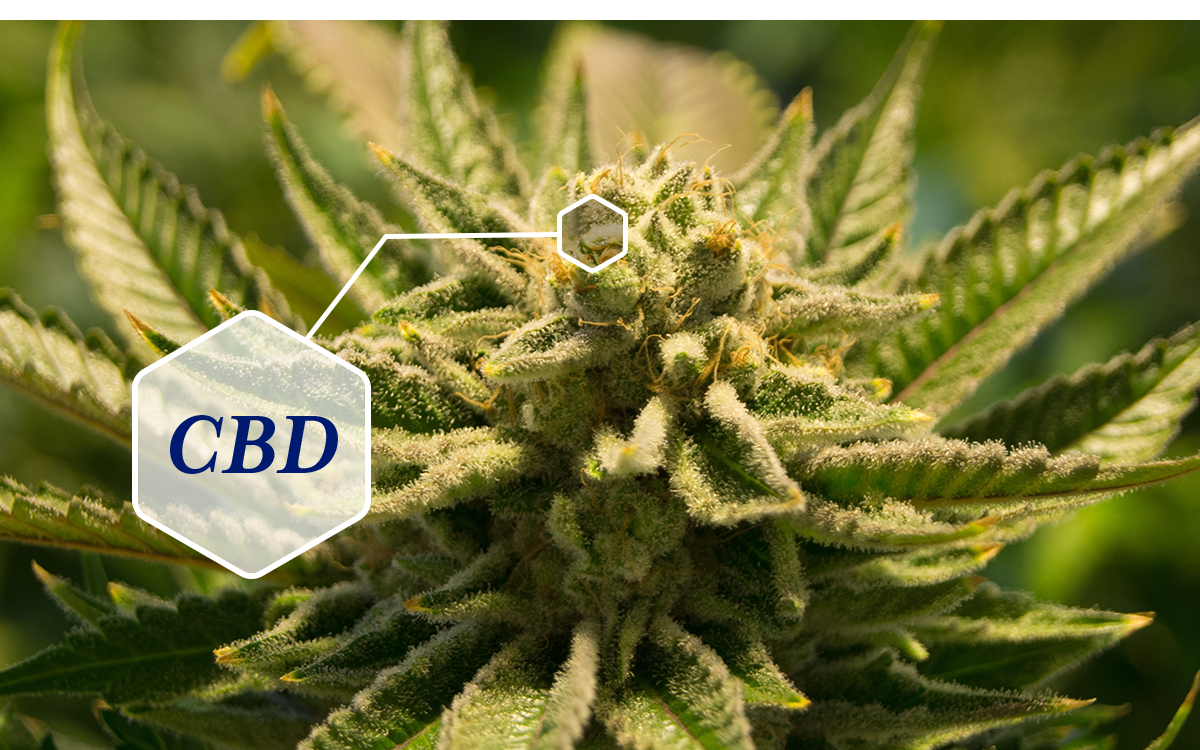
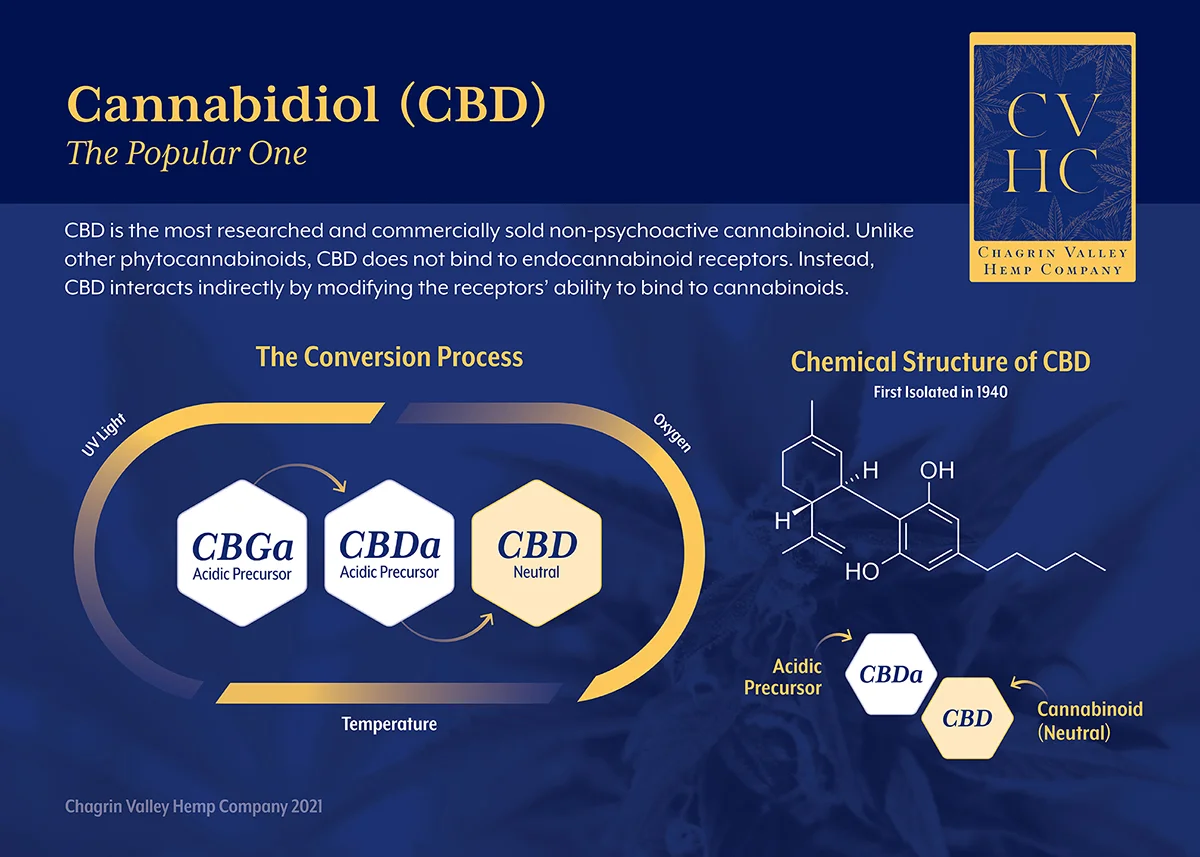
CBD is the most researched and commercially sold non-psychoactive cannabinoid. Unlike other phytocannabinoids, CBD does not bind to endocannabinoid receptors. Instead, CBD interacts indirectly by modifying the receptors’ ability to bind to cannabinoids.
Non-Psychoactive
There are many cannabinoids found in the hemp plant. Each has its own pathways that affect the mind and body in various ways. The vast majority of compounds, including CBD, are non-psychoactive. That means, it doesn’t get you “high.”
Modifies CB1 & CB2’s Ability to Bind to Cannabinoids
Many of the phytocannabinoid compounds found in hemp plants can bind to receptors found in our endocannabinoid system. Unlike the others, CBD has a unique interaction. Instead, it modifies the CB1 & CB2 receptors’ ability to bind with other cannabinoids. It’s believed that this interaction enhances natural levels of endocannabinoids.